


Bees in Switzerland: What We Refuse to See
We often talk about bees in spring.
We associate them with flowers, honey, and summer.
But we talk much less about their disappearance.
In Switzerland, the situation is more serious than we imagine. Almost all honeybee colonies living in the wild have disappeared. Today, most honeybees we know survive only because they are maintained by humans.
Each year, around one productive colony out of five is lost. And among solitary wild bees, nearly half of the species are threatened.
These numbers are not meant to dramatize.
They are here to remind us of a reality: the balance has been broken.
The invisible role of bees
When a bee colony disappears, it is not just less honey.
The pollination they provide is considered ecologically and economically more important than honey production itself. Without it, orchards produce less, crops become scarcer, wild plants decline — and with them insects, birds, and the entire food chain.
A bee colony is not simply a group of insects. It is a true superorganism, constantly interacting with dozens of other species, hundreds of mites, and thousands of microorganisms.
Honeybees are an excellent local biological indicator.
The bee is a discreet pillar of biodiversity.
And when that pillar weakens, the entire structure trembles.
A crisis with multiple causes
It would be reassuring to point to a single cause.
The reality is more complex.
Intensive agriculture plays a major role: pesticides, monocultures, the disappearance of natural meadows, and “nectar gaps” where no floral resources remain available. Bees do not die only from poisoning. They also die from hunger.
Modern forestry has reduced the number of hollow trees, removing the natural cavities essential for wild colonies. Urbanization is expanding, soils are being sealed, and landscapes fragmented.
But one point is particularly troubling:
Beekeeping itself.
FREETHEBEES draws a parallel with industrial livestock farming. Excessive colony density, sugar feeding, artificial selection, the importation of more “productive” bee strains, systematic medical treatments — these are the consequences of the strong pressure placed on honey production.
Behind every teaspoon of honey lies the work of an entire bee’s lifetime.
In nature, we typically observe 1 to 5 colonies per km². In some Swiss regions, there can be 10 to 20 colonies within just a few square meters.
This concentration promotes disease transmission, competition with wild bees, and weakens the entire system.
The conclusion is difficult: by trying to protect and maximize honey production, we have interrupted millions of years of natural evolution.
Colonies become dependent and less capable of adapting on their own.
An uncomfortable paradox
For a long time, we believed that “more hives” meant “more protection.” But an excessive density of honeybees can restrict biodiversity and endanger wild bees.
This paradox is rarely discussed.
The problem is not simply the number of bees. It is the way we integrate them into our ecosystems.
A different vision: restoring bees to their rightful place
Faced with this worrying situation, some propose increasing the number of hives even further. Others rely on more treatments and more control.
FREETHEBEES chooses a different path.
FREETHEBEES is a Swiss non-profit organization that has been working for several years on a fundamental question: what if the problem did not only come from the environment… but also from the way we perceive the bee?
Their conclusion is clear: the honeybee is now treated almost exclusively as a livestock animal — a production unit, a colony to optimize.
Yet research and observations show that in its natural state, the bee is a wild animal, autonomous and capable of adaptation — provided it is given the opportunity.
For FreeTheBees, long-term survival depends on a simple but ambitious idea:
The bee must be able to become wild again.
A strategy on several fronts
The association acts on several complementary levels.
Ecologically:
– Encouraging the return of natural cavities (hollow trees, passive nesting sites)
– Improving floral diversity
– Restoring habitats that allow autonomous life
Scientifically and legally:
FREETHEBEES advocates for the honeybee to be recognized both as livestock and as a wild animal — a distinction recognized at the federal level since 2015.
This recognition is essential to protect colonies living without human intervention.
In beekeeping practices:
The goal is not to oppose beekeepers and nature, but to gradually transform practices:
– Reducing excessive colony density
– Limiting systematic interventions
– Accepting a degree of natural selection
– Restoring the natural swarming process
These measures help restore the adaptive capacity of colonies.
In a context of climate change and rapid ecosystem transformation, only populations capable of evolving and adapting will survive sustainably.
A bee artificially kept alive is not a long-term solution.
A bee capable of adapting is.
A local project, a real impact
Today, no FREETHEBEES project has yet been implemented in Geneva.
So we chose to act here.
With Little Bees, we celebrated the bee as a symbol of delicacy, balance, and collective strength. A collection imagined as a tribute to life and to these invisible architects upon whom our ecosystem depends.
But a symbol, no matter how powerful, is not enough.
Following Little Bees, we wanted to transform this intention into a real commitment.
Supporting, alongside FREETHEBEES, the creation of a local project in Geneva to encourage the return of more autonomous colonies and to contribute concretely to the restoration of biodiversity in our region.
Thus, each piece of the collection goes beyond aesthetics.
It becomes an act of commitment.
A real contribution to local change.
Read more

Jewelry has long carried meaning beyond beauty. From Joan of Arc to modern women shaping their own paths, jewels have served as symbols of courage, identity and conviction. Discover how jewelry con...
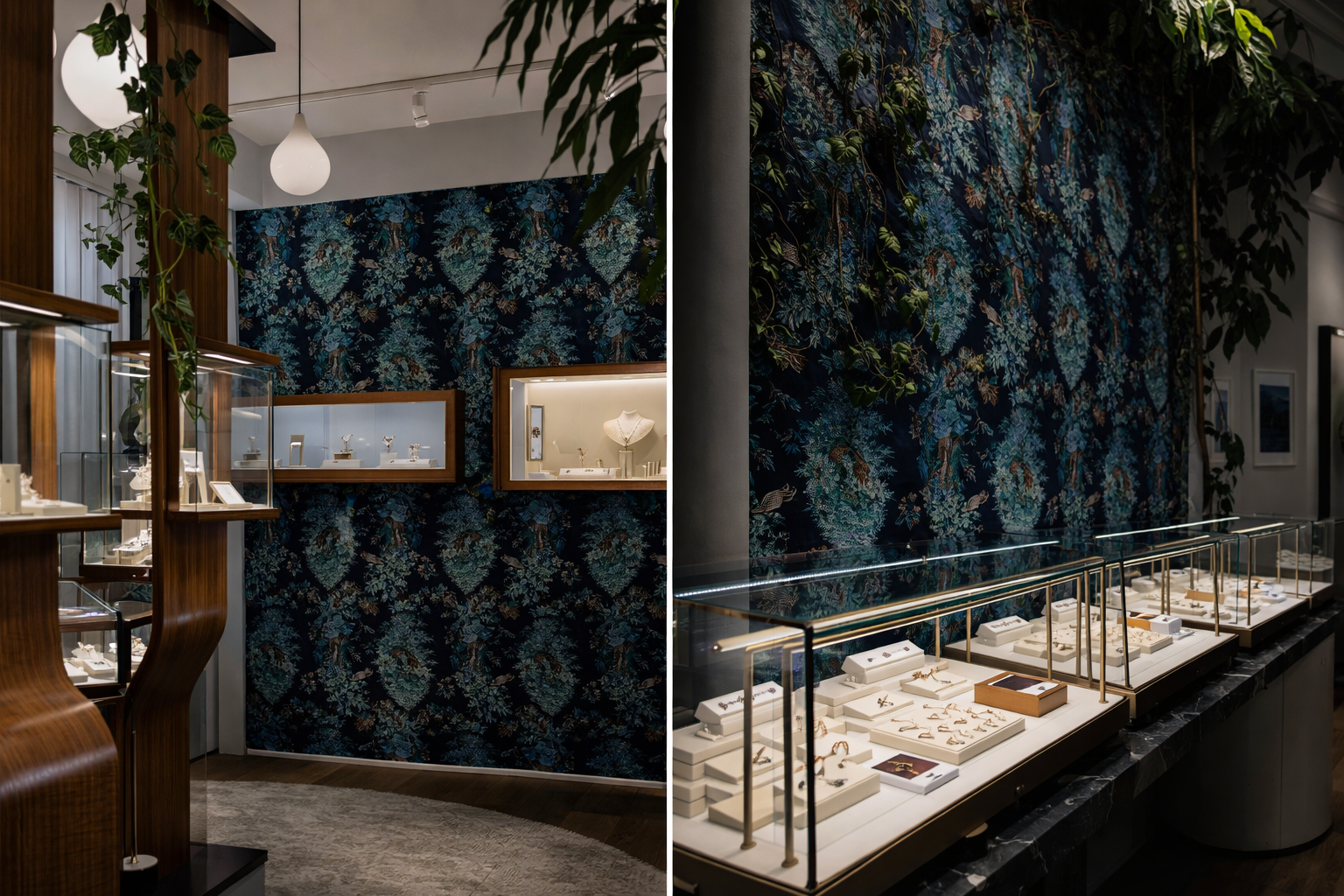
Discover how AGUAdeORO marks 17 years of ethical jewellery in Geneva and Zurich, guided by Fairtrade gold, transparency and a different vision of luxury.
Leave a comment
All comments are moderated before being published.
This site is protected by hCaptcha and the hCaptcha Privacy Policy and Terms of Service apply.