

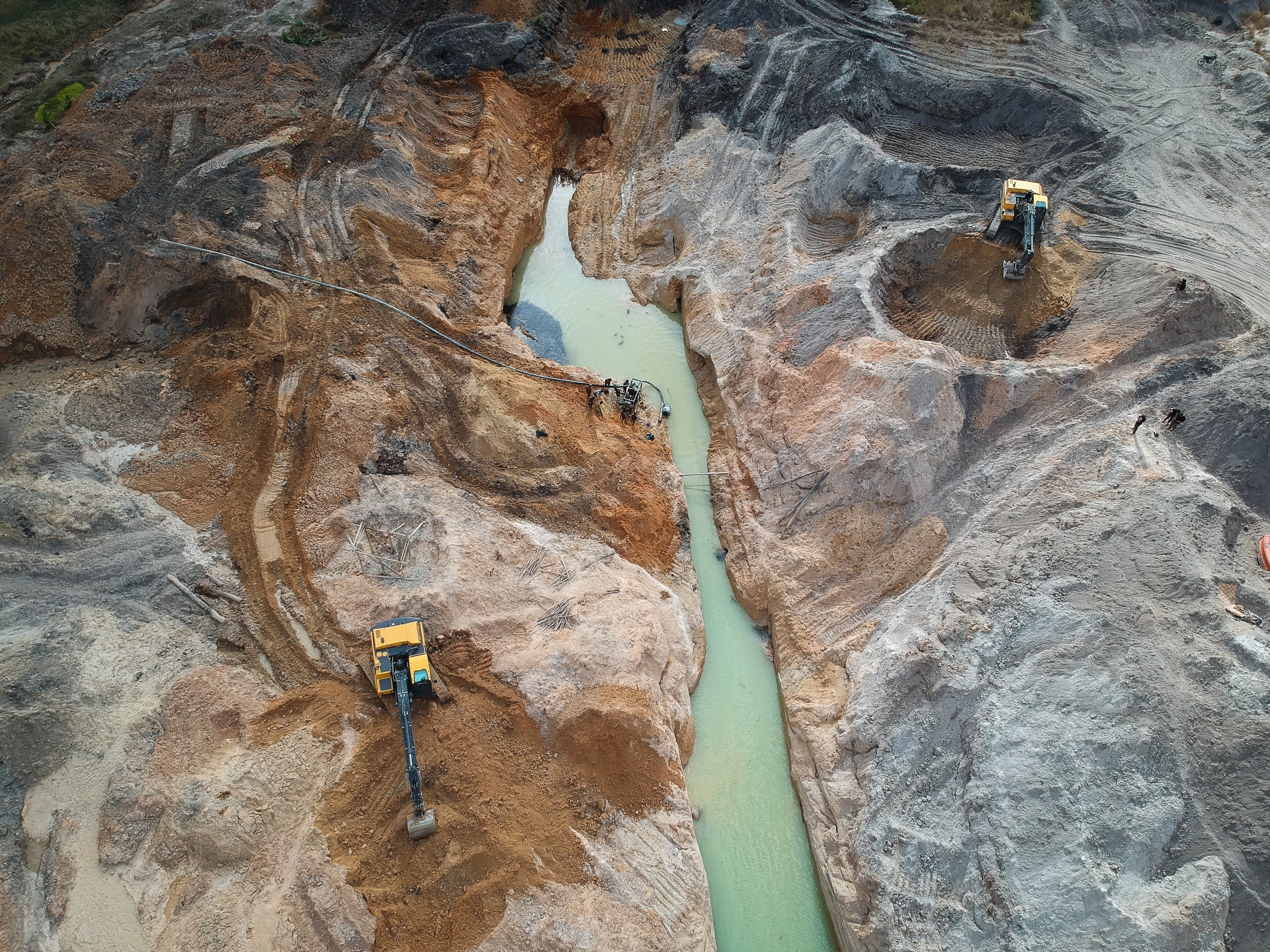
Abandoned Diamond Mines: The Scars of Luxury
Beneath the flawless light of a hand-cut diamond, we sometimes forget what is left behind. Once the last carat has been extracted, what becomes of the land that gave it life? Abandoned diamond mines, often absent from the jewellery narrative, leave behind a silent yet destructive legacy. At a time when more responsible luxury matters increasingly, it is essential to understand what may still lie beneath the brilliance of a stone.
What are the different types of diamond mines?
Diamond extraction relies on several methods:
- Open-pit mines: vast craters dug into the ground, visible from space, such as Mirny in Russia.
- Underground mines: deep tunnels following kimberlite veins, used notably in Botswana and Canada.
- Alluvial mines: diamond extraction from riverbeds, very common in West Africa and often carried out by artisanal miners.
- Marine mining: dredging the seabed off the coast of Namibia, extremely disruptive to ecosystems.
Although each extraction method has its own technical characteristics, they all have one point in common: their lasting impact on landscapes and communities.
Mine closure: a misleading ending
A diamond mine ceases operations when it is considered unprofitable or when the deposit is depleted. On average, the lifespan of an industrial mine ranges from 10 to 30 years, depending on the size of the deposit. But the end of extraction does not mean the end of its consequences. On the contrary, it often marks the beginning of a long process of abandonment, leaving behind a deeply disturbed territory.
After closure, landscapes can remain deeply altered when rehabilitation is insufficient. Pits, waste rock, mining residues and changes to water flows can contribute to erosion, increase sediment loads and locally affect soil and water quality.

Satellite image of the Mirny open-pit mine in Russia (Source: Google Earth, Image © 2024 Maxar Technologies / Landsat / Copernicus / Google)
Major social consequences
Mines, particularly in rural areas, structure entire economies. Their closure creates a deep human divide:
- Massive job losses for local populations.
- Collapse of the regional economy as shops, schools and services close.
- Forced migration to other mining areas or cities.
- Abandoned infrastructure: collapsed buildings, unsecured openings and persistent pollution.
Some former mining areas, such as Kolmanskop in Namibia or Kleinzee in South Africa, have become ghost towns, sometimes reoccupied by illegal miners who risk their lives searching for forgotten stones (Source: NPR).
A heavy environmental legacy
Abandoned diamond mines leave behind:
- Gaping craters or artificially levelled land.
- Long-lasting pollution of soil and water.
- Severe biodiversity loss: displacement of animal species, disappearance of habitats and ecological imbalances.
- Landscapes unable to recover without human intervention.
Mining sites become dead zones, unusable and marked by ecological damage that can sometimes be irreversible.
Rehabilitating post-mining sites: a costly exception
Some mining companies claim to implement rehabilitation programs: reforestation, water treatment, or transforming former sites into parks or artificial lakes. But these initiatives remain the exception. They are costly, lengthy and rarely complete. In countries where environmental legislation is weak, such commitments often remain unfulfilled.
The Intergovernmental Forum on Mining notes that some mine sites are closed or abandoned without sufficient plans or funding for long-term monitoring and management. Without appropriate rehabilitation and monitoring, these sites can pose lasting risks to communities and the environment.

Kolmanskop in Namibia, abandoned in 1956 after diamond reserves in the surrounding area were exhausted. (Photo by Max Murauer on Unsplash)
Toward luxury without scars: choosing lab-grown diamonds
At AGUAdeORO, we have chosen not to take part in this destructive extraction cycle. Our jewellery is set exclusively with lab-grown diamonds, created in laboratories under ethical and traceable conditions.
These diamonds have the same qualities as mined ones: the same chemical composition, the same brilliance and the same durability. But they are free from mining, population displacement and ecosystem destruction.
True luxury leaves no trace
A piece of jewellery should never be synonymous with devastation. At AGUAdeORO, we believe in ethical and sustainable jewellery, where every piece reflects not only beauty, but also the values of those who wear it.
Abandoned mines are the scars of an old form of luxury. Ours looks toward the future. A future illuminated by stones that shine without erasing the earth.
AGUAdeORO is a jewellery house founded in 2009, with locations in Geneva and Zurich. It offers clients the opportunity to acquire ethical jewellery made in Switzerland. We are committed to offering jewellery that combines sustainable development and elegance.
Main image: Sapphire mine in Madagascar (Photo credit: © Julie Zaugg, Public Eye)
Read more

Long a symbol of eternity and prestige, the mined diamond hides a far less dazzling reality. Behind the myth shaped by the industry lie artificial scarcity, human exploitation and devastating envir...

A symbol of love and legacy, gold has always fascinated. But did you know that its purity varies according to cultures and uses? Too malleable for everyday wear, 24-karat gold is rarely used in jew...
Leave a comment
All comments are moderated before being published.
This site is protected by hCaptcha and the hCaptcha Privacy Policy and Terms of Service apply.