

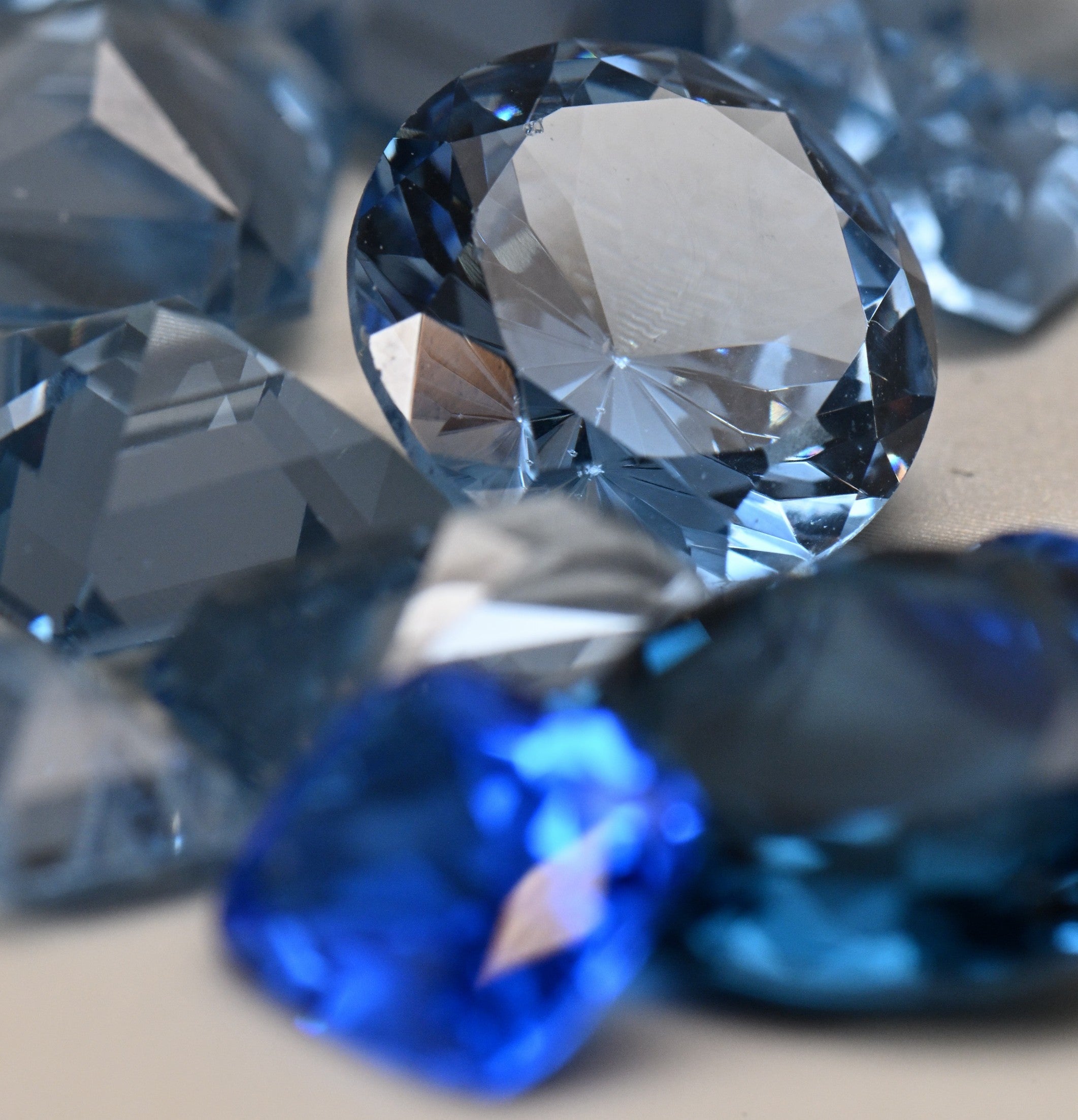
Aquamarine
Aquamarine is the birthstone of March. With its delicate shades of blue, reminiscent of clear ocean waters, it evokes a sense of calm, clarity and quiet refinement. Its crystal-like transparency and subtle brilliance make it one of the most elegant and soothing gemstones used in jewellery.
The name aquamarine comes from the Latin aqua marina, meaning “water of the sea”. Since antiquity, the stone has been closely tied to the marine world. Roman sailors wore it as a protective talisman, believing it could calm storms and guide them safely across the waters. Legend even tells that aquamarine was hidden within the treasure chests of mermaids, resting on the ocean floor. This deep connection with the marine world has endured through the centuries and continues to inspire the imagination surrounding this luminous gemstone.
Beyond its symbolism, aquamarine is part of the beryl family, alongside emerald. It is distinguished by its remarkable transparency and its subtle spectrum of tones, ranging from pale blue to lagoon hues, sometimes touched by a delicate green nuance. With a hardness of 7.5 to 8 on the Mohs scale, it is sufficiently durable to be used in many types of jewellery.
Aquamarine is found in several regions of the world, with Brazil remaining its primary source, alongside Madagascar, Pakistan, Nigeria and Mozambique. Like many gemstones, however, its extraction can impact both ecosystems and local communities, encouraging the industry to seek more transparent and responsible alternatives.


Laboratory-grown gemstones are gradually emerging as a compelling alternative to address the damaging supply chains associated with mining. Created in controlled environments that replicate natural crystal formation, they share the same physical and molecular properties as mined stones. Their development reflects a more conscious vision of luxury: one that values transparency, responsibility and innovation, principles at the heart of AGUAdeORO.
This search for balance between nature, light and transparency echoes the very meaning of the name AGUAdeORO. Literally translated as “water of gold”, it suggests a form of richness that reveals rather than conceals, like light passing through pure water. From this perspective, the value of a jewel lies not only in the rarity of its materials, but also in an awareness of their origin and the harmony they create with the world around them.
Beyond its aesthetic beauty, aquamarine has long been associated with a powerful symbolic dimension. Traditionally regarded as a stone of serenity and inner clarity, it is believed to encourage emotional balance and sincere communication. In some traditions, it also represents loyalty and trust, which explains why it is sometimes given as a symbol of commitment or to celebrate important moments in life. As the birthstone of March, it also embodies the idea of renewal, softness and harmony, values closely linked to the gradual return of light in spring.
In jewellery, aquamarine is especially appreciated for its natural elegance and its ability to capture light. Its soft, luminous colour pairs beautifully with precious metals such as white gold, platinum or yellow gold. It lends itself equally well to contemporary designs and to more classic, timeless pieces. Its aquatic character also becomes a true source of aesthetic inspiration, as seen in the Océane collection, where the reflections of the stones interact with light much like sunlight dancing on the surface of water.
FAQ
How should an aquamarine be cared for?
Aquamarine is a relatively durable gemstone and is well suited for regular wear. At home, it can be cleaned easily using warm water, mild soap and a soft brush, then gently dried with a soft cloth to preserve its clarity. It is best to avoid harsh chemicals and strong impacts. In jewellery boutiques, a deeper cleaning can also be performed using an ultrasonic machine, which helps restore the stone’s brilliance and gently clean the most delicate areas of the piece.
Is there an energetic difference between a natural aquamarine and a laboratory-grown one?
From a gemological perspective, a laboratory-grown aquamarine has the same essential chemical composition, crystal structure and optical properties as a mined aquamarine. At the molecular level, they are identical. As a result, their vibrational frequency and energetic properties are the same, since these qualities depend on the internal structure of the stone rather than its origin.
The only difference lies in its origin: one forms in nature over geological time, while the other is grown under controlled conditions by replicating this natural process. Any symbolic or emotional distinction therefore belongs to personal belief rather than scientific measurement.
What are some alternatives to aquamarine?
Several gemstones offer colours similar to aquamarine while each possessing their own character. Blue topaz ranges from soft sky blue to deeper shades and works well for jewellery worn regularly. Light blue sapphire, often slightly richer in tone, is particularly well suited to everyday pieces. Tanzanite, with its more velvety blue-violet reflections, is typically favoured for pieces worn on special occasions, such as pendants or earrings.
Do aquamarines exist in colours other than blue?
Aquamarines typically appear in shades ranging from very pale blue to blue-green, sometimes with a slightly greenish tint. The most sought-after colour, however, remains the clear ocean-blue tone that gives the gemstone its name. Other colours do exist within the same mineral family, but they are known by different names, such as emerald for deep green varieties or morganite for soft pink tones.
If you would like to continue your discovery, we invite you to explore our other articles:
“Emeralds: Discover All Their Secrets!”
“The Benefits of Lab-Grown Diamonds: A Little-Known Alternative”

The Fancy Blue Superellipse – 3.00 ct – 18k white gold

Ice Skating Girl Blue 0.50 carats - white gold 18K

Pretty Blue Eyes – 0.80 ct – platinum 950

Pretty Blue Eyes – 0.80 ct – 18k yellow gold

Curvy Blue – 1.50 ct – 18k yellow gold

Blue Velvet – 3.05 ct – platinum 950

Tanzanian Queen – 1.00 ct – platinum 950

Wavy Blue – 1.20 ct – 18k yellow gold
Read more
How Pink Gemstones Are Redefining Modern Elegance in Contemporary Jewellery In fine jewellery, colour often speaks before form. Long before a design is fully understood, a hue can set its tone, mo...

Fine jewellery is not reserved for special occasions. Discover how subtle, refined pieces can bring light, elegance and personality to everyday life.